
Zadornov SDN Delisting: How a Two-Stage Strategy Worked
Free Case EvaluationOn This Page
On April 3, 2026, the Office of Foreign Assets Control (OFAC) removed Mikhail Mikhailovich Zadornov from the Specially Designated Nationals and Blocked Persons List (SDN List), ending nearly four years of US blocking sanctions against the former Russian Finance Minister and chairman of Otkritie Bank. The delisting followed a deliberate two-stage approach: an administrative petition to OFAC, then a federal lawsuit in the US District Court for the District of Columbia. For practitioners working under Executive Order 14024, the case is one of the cleaner recent examples of how properly sequenced strategy moves a stalled petition to a result.
For executives who have left positions at sanctioned institutions, and for counsel weighing an SDN List removal petition, the Zadornov delisting rewards a close read.
Who Is Mikhail Zadornov?
Mikhail Zadornov is a Russian economist and public official with a four-decade career across government and banking. He served as Minister of Finance of the Russian Federation from 1997 to 1999 under three successive prime ministers, having previously chaired the Budget Committee of the State Duma. He sat in the Duma across several legislative terms as a member of the Yabloko party, a liberal opposition group historically critical of the Kremlin.
From 2005 to 2017, Zadornov ran VTB 24, the retail arm of VTB, Russia’s second-largest bank. He took the chairmanship of FC Otkritie Bank in 2018, brought in to steer the bank through recovery after the Central Bank of Russia stepped in to rescue it. Otkritie was absorbed into VTB Group in late 2022, and Zadornov submitted his resignation that December, leaving the chairmanship effective January 1, 2023.
How Zadornov Ended Up on the SDN List
In April 2022, OFAC designated Zadornov under Executive Order 14024, the Russia-related sanctions authority issued after Russia’s full-scale invasion of Ukraine. The basis was his role as chairman of Otkritie, which OFAC characterized as a systemically important Russian financial institution operating in the interests of the Russian government. Otkritie itself had been added to the SDN List in February 2022 as part of the initial wave of designations against the Russian banking sector.
The United Kingdom imposed parallel sanctions in May 2022, and Ukraine added Zadornov to its own restrictive measures in February 2023. By the time delisting work began, he was sanctioned in multiple Western jurisdictions, and the underlying designation rested entirely on a corporate position he no longer held.
Step One: The Administrative Petition
In December 2023, roughly one year after stepping down from Otkritie, Zadornov filed a petition with OFAC seeking reconsideration of his designation and removal from the SDN List. The arguments are familiar to anyone who works on delisting matters: the petitioner no longer held any position in the Russian financial sector, was no longer connected to Russian state structures, and exercised no influence over government policy. The filing also pointed to OFAC’s own precedent. The agency had previously removed several former Otkritie executives from the SDN List under analogous facts, after they too departed the bank following sanctions.
The petition produced nothing. OFAC neither granted nor denied it; the administrative review process simply stalled. This is a familiar pattern. Under 31 C.F.R. § 501.807, OFAC’s reconsideration procedure imposes no deadline for agency action, and petitions routinely sit pending for years.
Step Two: The Federal Lawsuit
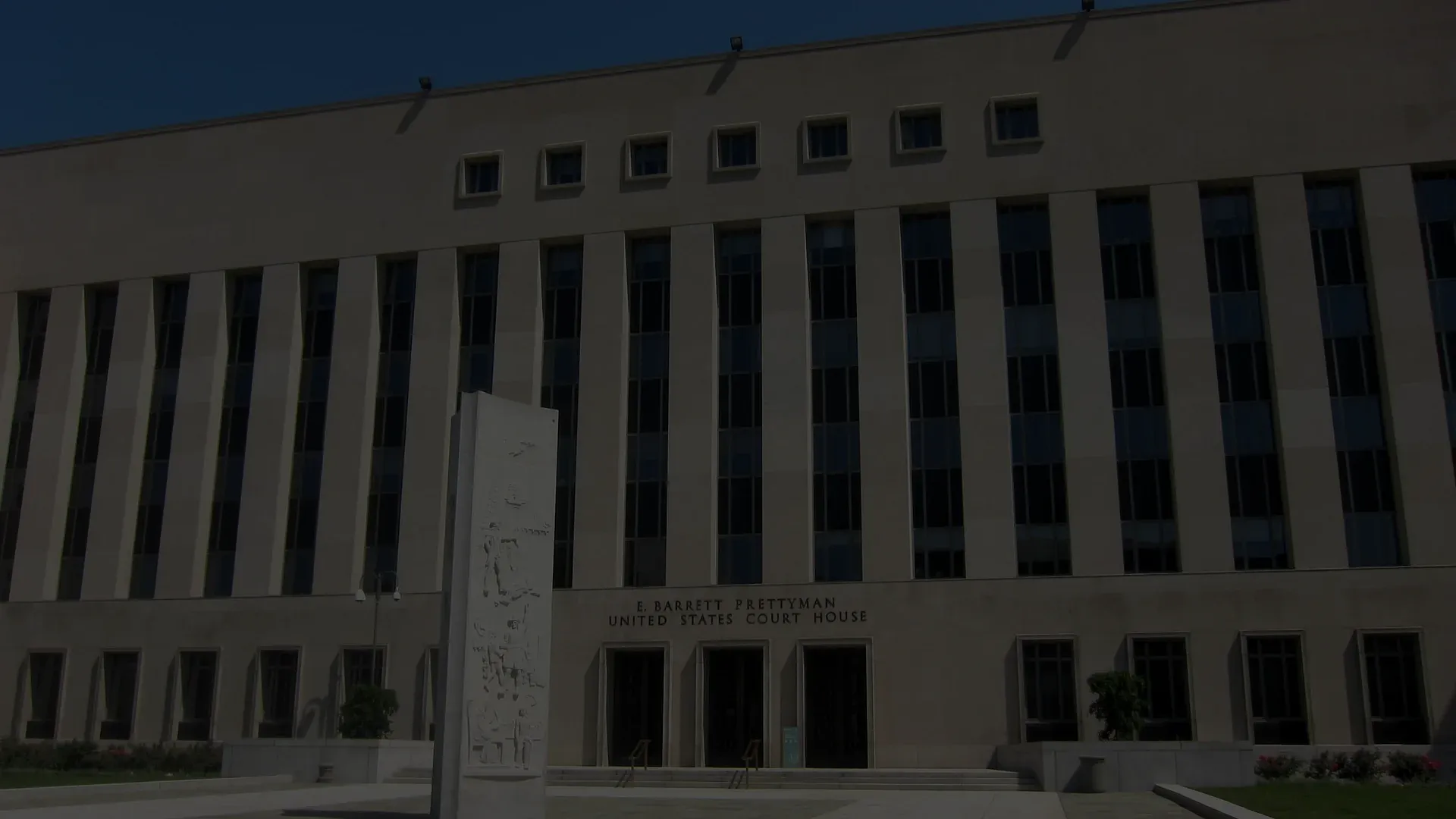
On July 30, 2024, Zadornov filed suit in the US District Court for the District of Columbia. Zadornov v. Blinken et al., Case No. 1:24-cv-02239, named the US Department of State and then-Secretary Antony Blinken among the defendants. Filing suit in this posture is a tactical move. Litigation creates procedural pressure the administrative track cannot generate on its own: the government must respond to court inquiries, defend its position on the record, and meet deadlines set by an Article III judge rather than the agency itself. That dynamic frequently pushes the parties into real settlement discussions.
The Legal Theories
The complaint was filed under the Administrative Procedure Act (APA, 5 U.S.C. § 701 et seq.) and advanced four principal arguments:
- Unlawful delegation of authority. The complaint alleged that OFAC had effectively transferred decisional authority over Zadornov’s delisting petition to the State Department, which lacks regulatory authority to adjudicate such matters. 31 C.F.R. § 501.807 vests OFAC alone with the power to adjudicate a reconsideration petition. The State Department contributes a foreign-policy view at the designation stage, but no statute or regulation gives it a role in deciding whether to lift a designation.
- Arbitrary and inconsistent agency action. OFAC had granted delisting to similarly situated former Otkritie executives. Refusing to act on Zadornov’s petition while granting analogous requests was arbitrary under APA review standards.
- Unreasonable delay. Inaction on the petition over many months amounted to agency inaction reviewable under 5 U.S.C. § 706(1).
- No remaining factual predicate. Zadornov’s listing rested on his role at Otkritie. Once he had left that role, there was no live factual basis on which his property could continue to be blocked.
The most consequential move was the distinction between status-based and conduct-based sanctions. Zadornov’s designation was tied to a corporate position, not to alleged personal conduct. Once the position was gone, the factual predicate for designation collapsed. For executives of sanctioned institutions who have cleanly severed their affiliations, this is one of the sharpest lines of attack available.
Settlement and the Delisting
About eighteen months after the complaint was filed, the parties reached a resolution. A hearing scheduled for February 11, 2026 was vacated on joint motion. On April 3, 2026, OFAC announced the Zadornov delisting on its Recent Actions page.
Treasury issued no formal explanation. Speaking anonymously, a US official told Reuters that the delisting was attributable to Zadornov’s “positive behavioral changes” and should not be read as a shift in Washington’s wider sanctions posture toward Russia. The same official described delisting as “a tool to realize U.S. foreign policy goals,” language consistent with OFAC’s long-stated view that removal reflects a change in circumstances rather than a concession on the underlying program.
Four Lessons for SDN List Removal Strategy
The substantive law is well-settled. The interesting part of Zadornov is the sequencing and the discipline behind it. Four takeaways:
1. An administrative petition alone is rarely enough.
31 C.F.R. § 501.807 is the formal vehicle for seeking reconsideration, and it remains the necessary first step. It imposes no obligation on OFAC to act within any defined timeframe, and the agency routinely takes years to issue a substantive response, if it issues one at all. A petition filed in isolation will sit in administrative limbo indefinitely.
2. A federal lawsuit is a procedural lever, not a substitute.
Litigation does not replace the administrative process; it complements it. The lawsuit forces OFAC to engage, take a position on the record, and either defend or revisit its inaction. Zadornov’s lawsuit converted a stalled petition into a negotiated outcome within roughly eighteen months, significantly faster than the administrative track had moved on its own.
3. The loss-of-status argument is potent.
The distinction between status-based and conduct-based sanctions sits at the heart of many successful delisting strategies. An executive designated solely on the basis of a corporate role has a substantially stronger position once that role ends. Document the departure, show the absence of ongoing influence, tie those facts to OFAC’s own prior delisting decisions, and you have built a record the agency has to engage with on the merits.
4. Precedent matters, even at OFAC.
OFAC is not bound by stare decisis in the judicial sense, but its decisions are reviewable for arbitrariness under the APA. Where the agency has granted delisting to comparable individuals, as it had for other former Otkritie executives, disparate treatment of similarly situated petitioners is itself a cognizable legal claim. Building the record of analogous delistings is one of the most undervalued parts of petition preparation.
What This Means for Other SDN-Listed Individuals
Zadornov is a high-profile result, but the strategic principles apply equally to less visible cases. Most SDN List designations involve individuals and entities the public has never heard of: dual nationals caught in mistaken-identity blocks, executives of sanctioned companies, family members of designated persons, and businesses entangled with 50% Rule ownership chains. The procedural mechanics, petition, demand for agency action, and federal litigation where warranted, are the same.
Successful delisting work comes down to sequencing, evidentiary discipline, and a clear-eyed view of when administrative pressure has reached its limit and litigation is the only remaining lever. OFAC will respond to a well-built record. It will rarely respond to a thin one, no matter how long it sits in the queue.
Working with an OFAC Lawyer on an SDN List Removal
Sanctions Law Center represents individuals and companies seeking removal from the SDN List, including former executives of designated institutions, individuals affected by mistaken identity, and entities caught in 50% Rule blocking chains. Our practice covers the full delisting pathway, from initial petition preparation under 31 C.F.R. § 501.807, through engagement with OFAC’s Office of Global Targeting, and, where necessary, federal litigation under the APA.
If you are on the SDN List, or weighing a delisting petition, we can assess the strength of your position, identify the right procedural posture, and build a sequenced strategy aimed at producing a decision rather than a stalled record. Contact us here to schedule a consultation with one of our OFAC lawyers.
On This Page
Recent Blog Posts
Exodus Movement Settles with OFAC for $3.1 Million Over Iran Sanctions Violations
Exodus Movement agreed to pay $3.1M to settle 254 apparent Iran sanctions violations. Learn what crypto and fintech companies need to know about OFAC compliance from this enforcement action.
My Funds Were Blocked Because of OFAC Sanctions – What Do I Need to Know to Get My Money Back?
Discover what it means when OFAC blocks your funds, who can unblock them, how to apply for an unblocking license, and why working with an OFAC sanctions lawyer is essential to recovering your money.
OFAC Issues Potash Exception to Belarus Sanctions
OFAC issued Belarus General License No. 13 on December 15, 2025, authorizing transactions with major Belarusian potash producers as part of a prisoner release agreement. Learn about the implications for U.S. businesses.